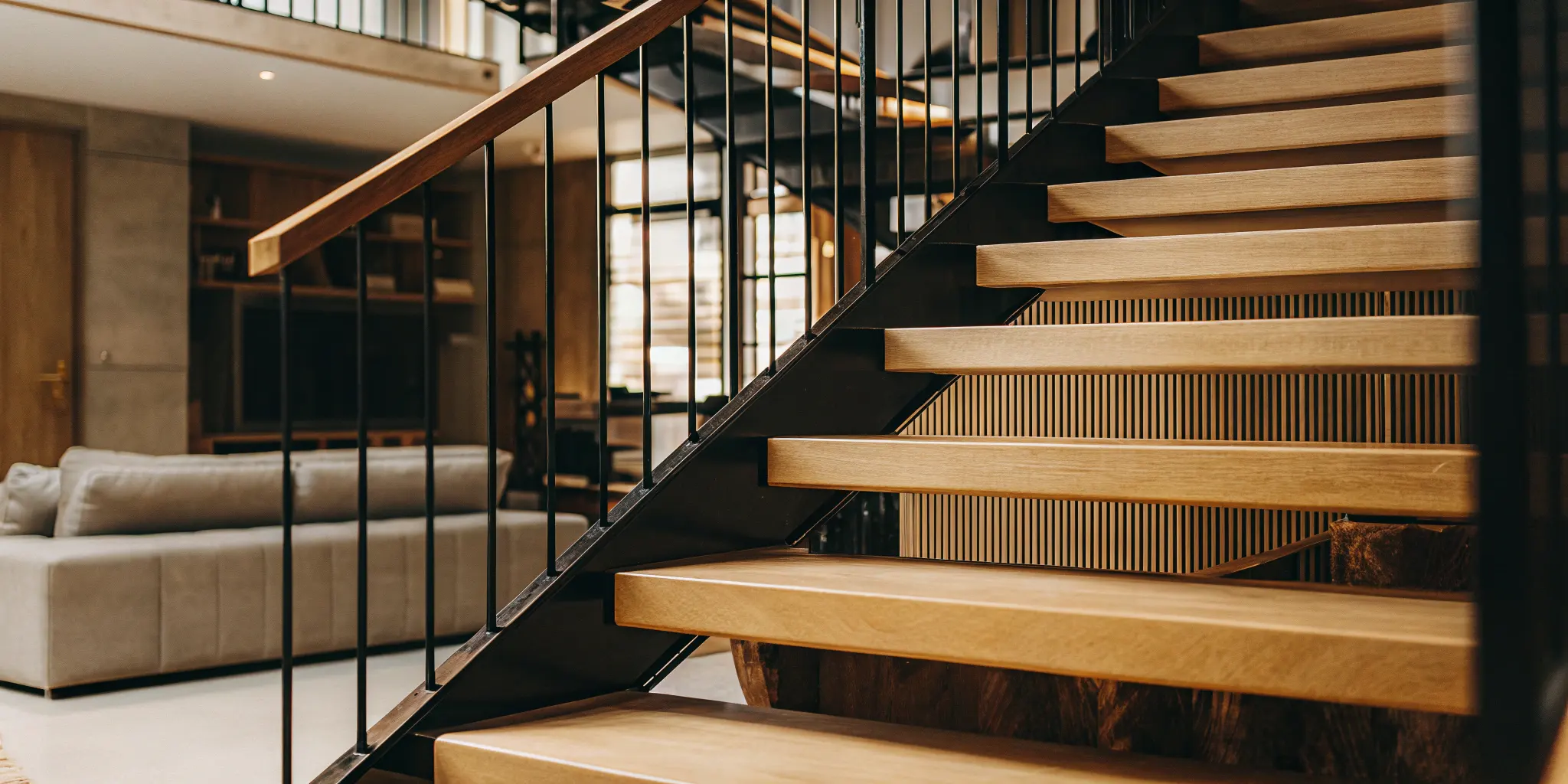

How to protect your solid wood stairs from scratches and damage
Practical preventative advice and proven restoration techniques for oiled and lacquered solid hardwood stair treads

Solid wood stair treads represent both a timeless aesthetic statement and a lasting investment in durable home craftsmanship. As with any living, natural material, solid timber requires attentive routine care to preserve its structural resilience and organic warmth across decades. For homeowners, mitigating micro-abrasions, high-traffic surface wear, and accidental gouges remains the primary prerequisite for lasting beauty.
Consistent prevention is the most practical and cost-effective approach to stair maintenance. Eliminating the source of surface abrasions early completely removes the need for complex refinishing projects down the road.
Core steps for daily preventative protection
Shield steps from outdoor footwear: Establish a habit of removing outdoor shoes at the entryway, especially footwear with hard-compound soles, cleats, or stiletto heels. Position high-density entrance mats near the door and at the base of the staircase to trap coarse grit, road salt, and dirt before they act as sandpaper on the timber.
Utilize stair tread runner pads: Specialized runner pads or carpet treads protect the central traffic path from localized wear while adding an acoustic dampening layer. Select pads engineered with high-friction, non-slip backings to safeguard step safety without trapping moisture against the wood.
Install protective boundaries and child gates: In households with small children or active pets, integrating sturdy gates around stair openings manages daily foot traffic and prevents impacts from hard toys, dropped items, and heavy play.
Perform regular, non-abrasive cleaning: Routine removal of dust and dry particulate matter is the foundation of surface longevity. Wipe treads with a slightly damp microfiber mop and a pH-neutral cleaner formulated specifically for solid hardwood stair treads. Never introduce harsh abrasive powders, scouring sponges, or ammonia-based agents that erode protective sealants.
Remedying scratches on natural oiled finishes
Natural oil-impregnated surfaces offer exceptional repair flexibility because blemishes can be resolved locally without stripping the surrounding floor. For minor surface scratches, apply a drop of high-grade maintenance oil (or natural walnut oil) using a soft cotton applicator, massage it gently along the wood grain into the abrasion, and buff off any excess residue with a clean, lint-free cloth.
When dealing with deeper indentations where the wood fibers themselves are bruised, professional joinery care is recommended. A skilled craftsman will level the compression with precision moisture-steaming, apply color-matched grain filler, and spot-oil the repair to blend with the original sheen.
Repair methods for lacquered wooden surfaces
Protective polyurethane and acrylic lacquers cure into a hardened protective barrier over the timber grain. The remediation strategy depends directly on whether the damage is contained to the clearcoat or penetrates through to bare wood:
Spot lacquer remediation
When a hairline scratch is restricted entirely to the clearcoat without scoring the underlying wood, gently buff the blemish with fine-grit abrasive paper and feather in a fresh clearcoat layer. Professional execution ensures seamless luster matching across adjacent steps.
Touch-up wax and polishing paste
For fine surface marks, specialized paste waxes and clear polishing compounds provide immediate cosmetic leveling. They fill the scratch trough and balance surface reflection. Keep in mind that topical wax fills wear down over time and periodically require reapplication.
Color-matched wood filler and hard wax
For prominent gouges extending past the lacquer film, heat-applied hard wax repair sticks or tone-matched wood fillers should be worked into the void. Once cured, the repaired spot is trimmed level with the surface plane and sealed with a durable clear lacquer coat.
Comprehensive professional resurfacing
When footsteps have worn down the lacquer barrier across entire treads, or if deep dents are widespread, full mechanical sanding down to bare grain followed by the application of commercial-grade floor sealants provides a complete, factory-grade restoration.
Preventing secondary mechanical damage
Never drag heavy loads across timber edges: When moving furniture, appliances, or storage trunks between floors, never slide them directly across step nosings. Always cushion the path with thick moving blankets, dense felt, or use stair-climbing hand trucks fitted with non-marking rubber wheels.
Manage household pet scratching: Provide attractive, dedicated scratching posts for pets elsewhere in the home. While hard, flat oak treads rarely entice cats or dogs, adjacent elements—such as turned timber balusters or soft-grained handrail curves on metal stair structures—may require protective vigilance and timely claw trimming.